#Cyber Security
What Is Continuous Assurance in Cybersecurity?
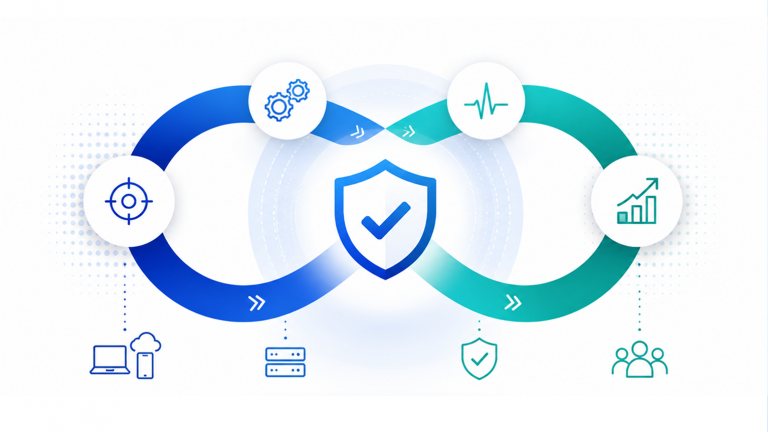
Organizations invest heavily in security tools, compliance programs, and risk management processes. Yet many security leaders still struggle...
On July 25, 2025, the Indian Computer Emergency Response Team (CERT-In) launched a major update to its cybersecurity audit guidelines. These new rules aim to move India’s security posture from basic compliance to deep resilience.
The 2025 guidelines don’t just tell organizations to perform audits—they reshape how those audits work. They set clear standards for planning, execution, and follow-up. They demand accountability from both auditors and organizations. And they expand the audit scope to include AI systems, mobile apps, cloud platforms, supply chains, and even blockchain infrastructure.
Most importantly, CERT-In now wants organizations to treat audits as a strategic defense tool, not just a legal requirement. The guidelines push leaders to ask: Are we truly secure? Not just: Are we compliant?
This article breaks down what changed, why it matters, and how your organization can get ahead of these sweeping new expectations.
CERT-In’s July 2025 guidelines go far beyond previous audit protocols. They focus on strengthening India’s digital defenses through clarity, structure, and real accountability. Here’s a look at the key changes every organization needs to understand:
Organizations must now conduct full-scale cybersecurity audits every year. These audits must cover all key assets—networks, applications, cloud setups, operational technology (OT), and even mobile platforms. Sector regulators may also demand more frequent checks based on the nature of risk.
CERT-In urges organizations to align their audits with real-world threats, not just check off regulatory boxes. Audits must consider how systems actually function, how users interact, and where vulnerabilities might lead to serious harm.

The new guidelines bring in cutting-edge systems under the audit lens:
This reflects a clear message: if your tech stack is complex, your audit must be too.
Auditors must now use two scoring systems to rank vulnerabilities:
This dual approach helps prioritize what matters most and what needs fast action.

Only CERT-In-approved professionals can perform audits. No interns, third-party contractors, or freelancers allowed. Audit teams must document everything: tools used, methods followed, issues found, and how they confirmed results.
Every audit report must include:
Organizations must act on audit findings—and prove they’ve fixed them. Auditing teams must perform follow-up checks to confirm that fixes were applied properly. Only then can the final report be closed.
Auditors must now share audit metadata with CERT-In within 5 days of completion. This helps the government track security trends, raise national alert levels, and improve standards across sectors.
CERT-In’s 2025 guidelines draw a clear line between what auditors must deliver and what organizations (auditees) must own. The message is simple: cybersecurity is a shared responsibility—but accountability starts at the top.
Auditee organizations no longer have the luxury of passive involvement. The new rules require them to:
Executives and board members must review and approve audit plans. They also need to track whether teams fix the issues the audit uncovers. Cybersecurity is now a boardroom issue, not just an IT checklist.
Once the audit identifies vulnerabilities, the auditee must fix them promptly. Teams must patch systems, close gaps, and prepare for follow-up reviews. If something isn’t fixed, the organization—not the auditor—is held responsible.
Before an audit begins, auditee organizations must ensure that their apps follow secure-by-design practices. Auditors won’t assess insecure or untested systems. This prevents “compliance theater” and encourages proactive security from Day 1.
Organizations must:
Security now starts at configuration—not during damage control.
Auditees must provide full access to systems, people, and data in scope. They must also avoid any changes to systems during the audit and maintain integrity throughout the process.
The auditors themselves face stricter rules and higher expectations.
Only personnel declared to CERT-In can perform audits. Auditors cannot deploy interns, freelancers, or third-party consultants. Every team member must meet CERT-In’s eligibility and ethical standards.
Auditors must avoid conflicts of interest. Audit fees cannot depend on results. Auditors must report if the auditee tries to influence findings or pressure them during the process.
All audit data must:
Auditors must issue a certificate confirming secure deletion of sensitive data.
Auditors must:
Audit teams must understand the latest threats, tools, and regulatory standards. CERT-In expects continuous skill-building—not just past experience.
CERT-In’s 2025 guidelines come with serious teeth. The framework doesn’t just advise best practices—it enforces them with clear consequences. Organizations and auditors who ignore responsibilities or fail to meet standards will face swift and graded action.
Organizations can no longer push blame onto auditors. Under the new rules, if a breach happens due to poor remediation, delayed fixes, or weak internal practices, the auditee holds the primary responsibility.
Auditees must:
Failing to act on critical vulnerabilities, especially those with known exploitation risks, puts the organization at regulatory and reputational risk.
CERT-In introduced a graded penalty system for empaneled auditors who fall short. These include:
| Violation Type | Consequence |
| Minor lapses (e.g., vague reports, missed details) | Watchlist + Warning + Written Commitment |
| Repeat failures or poor audit quality | Temporary Suspension |
| Malpractice or gross negligence | De-empanelment under GFR rules |
| Data breaches or misconduct | Penal & Legal Action |
CERT-In won’t wait for repeated violations. Even a single serious breach of trust can trigger immediate penalties.
CERT-In has the right to:
This oversight helps ensure that both sides—auditors and auditees—treat audits with the seriousness they demand.
Auditors must share audit metadata and outcomes with CERT-In within five working days of audit completion. This requirement:
Failure to report on time is a compliance breach.
CERT-In’s 2025 guidelines don’t just change how audits are done—they change how organizations prepare for and respond to cyber risk. The impact stretches across leadership, technology, procurement, compliance, and even vendor management.
CISOs and IT security heads must shift from reactive fixes to proactive planning. The new framework expects leaders to:
Security teams can no longer silo audits under compliance. They must treat audits as tools to detect, correct, and improve continuously.
CERT-In now involves the Board of Directors and senior executives at key points:
This demands a cultural shift where cyber risk becomes part of business risk—and leadership treats it with equal urgency.
For development teams, the message is clear: you can’t audit your way out of insecure code.
Applications must be:
If the software doesn’t follow these steps, auditors can reject it outright.
Supply chain and third-party risks are now audit scope items. Procurement teams must:
Vendor risk is now your risk—and CERT-In will hold you accountable for it.
Sectors using:
…must now include these technologies in audit scope. The era of ignoring “non-traditional” infrastructure in security audits is over.

Organizations must now build audits into:
Treating audits as end-of-year rituals will no longer work.
The Bottom Line
CERT-In’s 2025 guidelines tell every enterprise—large or small—that security is not a department. It’s a shared responsibility that touches every system, contract, and decision. The earlier leaders embrace this, the stronger their organization will stand against modern threats.
The CERT-In July 2025 guidelines signal more than a regulatory update—they mark a shift in national cybersecurity thinking. With clearer rules, deeper scopes, and stricter enforcement, India has laid the foundation for a resilience-first digital future.
Organizations that embrace these changes won’t just pass audits—they’ll build systems that can withstand evolving threats, adapt to new technologies, and inspire trust across ecosystems.
This is not the time to aim for the bare minimum. It’s a call to lead through security, to weave protection into every layer of operations, and to treat audits as tools for growth. Those who act now will not only meet CERT-In’s standards—they’ll help raise the bar for the entire ecosystem.
At SPOG.AI, we are committed to empowering organizations with intelligent, risk-aware security solutions that go beyond compliance—helping you build true cyber resilience in line with CERT-In’s vision for a secure digital India.
Organizations invest heavily in security tools, compliance programs, and risk management processes. Yet many security leaders still struggle...
Introduction — When the Cloud Shakes, Compliance Crumbles When AWS’s US-east-1 region went dark, so did thousands of...
Introduction There are two sides to a coin and AI is no exception. AI’s versatility is what makes...