#Cyber Security
What Is Continuous Assurance in Cybersecurity?
Organizations invest heavily in security tools, compliance programs, and risk management processes. Yet many security leaders still struggle...
As India accelerates toward becoming a digital-first economy, regulatory frameworks are increasingly shaping how enterprises manage data, AI, and security operations. At the heart of this transformation lies the Digital Personal Data Protection (DPDP) Act, 2023.
A landmark legislation establishing India’s first comprehensive privacy framework. It lays down clear expectations around privacy, consent, and accountability, positioning data protection as both a compliance necessity and a business differentiator.
The recently notified DPDP Rules 2025 mark the next milestone in this journey — translating legislative intent into operational practice. These Rules aim to define how organizations should obtain verifiable consent, manage user data, report breaches, and enable individuals to exercise their rights. They also clarify roles such as Data Protection Officers (DPOs) and Consent Managers, and lay the groundwork for the functioning of the Data Protection Board of India (DPBI).
However, the road to compliance remains uneven. According to ETCISO Intelligence Cybersecurity Leadership Report 2025, a majority of Indian organizations describe themselves as either “work in progress” or “mostly compliant but with gaps,” while only about 20–25% claim to be fully compliant with the DPDP framework.
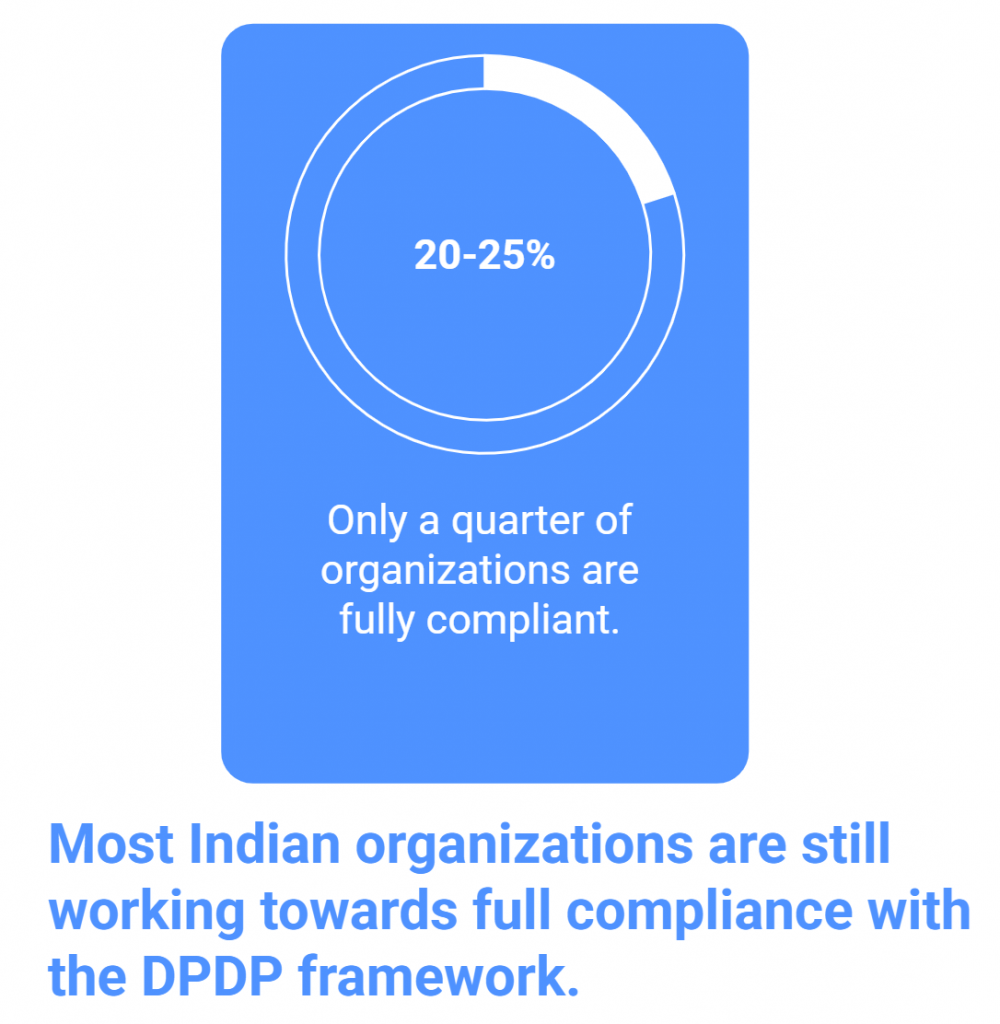
This mirrors the early stages of GDPR compliance in Europe, where achieving full readiness was a multi-year process rather than a one-time project.
Here’s a DPDP act compliance readiness checklist in alignment with the latest draft rules, including all the changes.
The journey from the Digital Personal Data Protection (DPDP) Act, 2023 to the DPDP Rules 2025 has been one of iterative consultation, sectoral debate, and mounting regulatory urgency. The Act, passed in August 2023, laid a foundational legal framework for how personal data should be collected, processed, and protected in India. Yet, it intentionally left much of the “how” to subsequent rules — a necessary but challenging choice given the country’s diverse digital ecosystem.
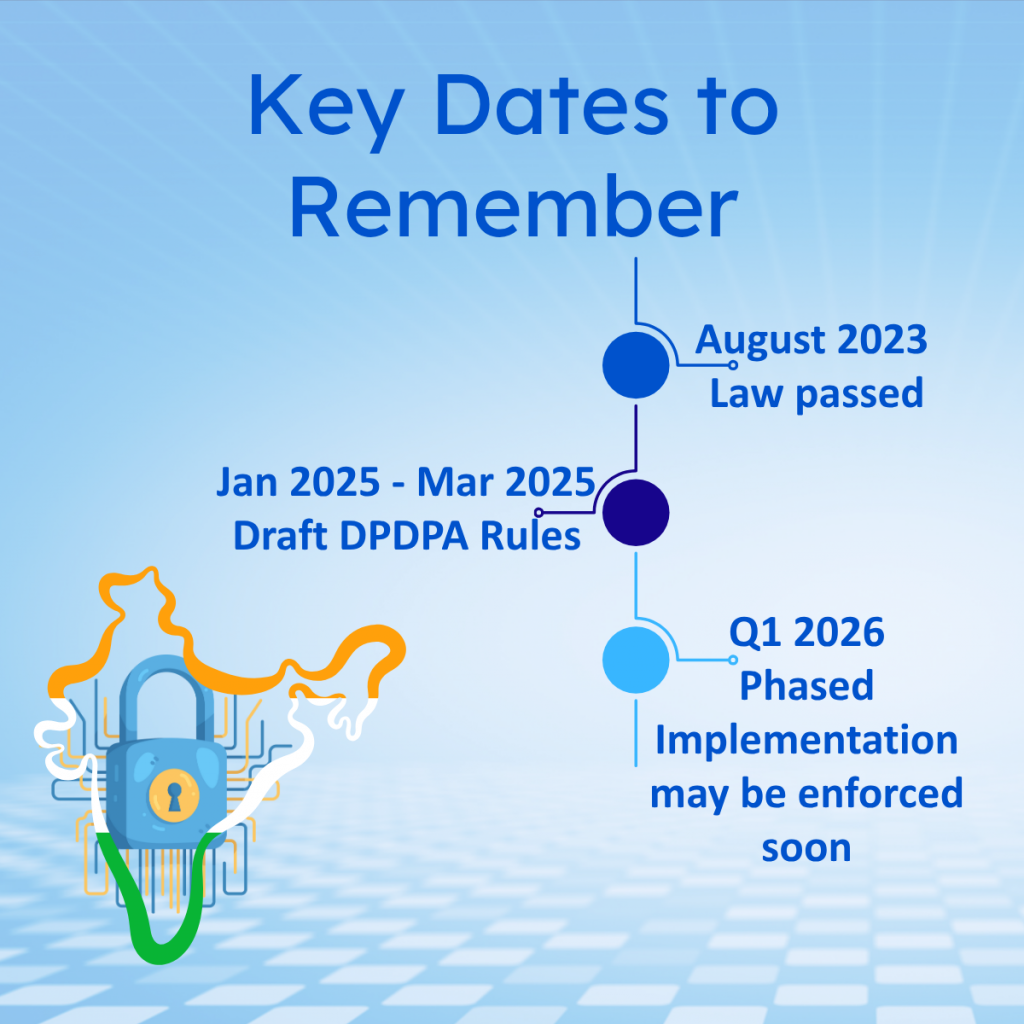
The Ministry of Electronics and Information Technology (MeitY) spent much of 2024 conducting multi-stakeholder consultations, engaging with industry bodies, civil society groups, legal experts, and technology associations. Draft Rules were circulated in late 2024, with feedback spanning from requests for clearer consent mechanisms to leniency in reporting obligations for small and medium enterprises (SMEs). By mid-2025, the government notified the finalized DPDP Rules, bringing long-anticipated structure to data governance obligations.
These Rules seek to translate broad legal principles into enforceable standards — defining the roles and responsibilities of Data Fiduciaries, Significant Data Fiduciaries (SDFs), and Consent Managers. They outline procedural details for grievance redress, breach notification, cross-border data transfers, and data retention. Importantly, they also operationalize the Data Protection Board of India (DPBI), setting in motion the institutional mechanism for oversight and enforcement.
The timing of the Rules is strategic. With India’s digital economy projected to cross USD 1 trillion by 2030, and with the growing integration of AI and machine learning models in enterprise operations, the government needed a robust governance framework to sustain both innovation and public trust. The Rules thus arrive not in isolation, but as part of a broader regulatory convergence — aligning privacy, cybersecurity, and AI oversight under a shared policy vision of “trust through transparency.”
Yet, this regulatory maturity also brings complexity. For enterprises already navigating frameworks like the Information Technology Rules (2021), CERT-In directives, and sectoral data guidelines issued by regulators such as the RBI and IRDAI, the DPDP Rules add another compliance layer. How these frameworks will coexist — or conflict — remains one of the biggest questions as India operationalizes its new data protection regime.
The DPDP Rules 2025 transform the high-level commitments of the 2023 Act into concrete, operational mandates for organizations handling personal data. They seek to standardize compliance practices, strengthen individual rights, and streamline enforcement through the Data Protection Board of India (DPBI). While they bring much-needed structure, several provisions are still evolving in interpretation and practical application.
Perhaps the most significant area of elaboration lies in how consent must be obtained, verified, and managed.
The Rules specify that consent must be:
The introduction of Consent Managers—independent entities registered with MeitY—marks a new governance layer. These intermediaries are tasked with managing consent lifecycle operations between data principals and data fiduciaries, ensuring transparency in both granting and withdrawing consent.
The Rules also operationalize the concept of “deemed consent”, allowing limited data processing without explicit consent in cases such as national interest, employment purposes, or emergencies. However, the absence of strict boundaries for such exemptions continues to be a concern among privacy advocates.
For individuals, the DPDP Rules detail the procedures for exercising rights—including access, correction, erasure, and grievance redress. Data fiduciaries must:
The Rules also require fiduciaries to inform data principals about automated decision-making, wherever applicable—a nod to the growing use of AI-driven systems in processing personal data. However, the lack of explicit definitions for “profiling” or “automated decision” could create interpretational challenges.
The 2025 Rules codify a layered compliance framework based on the organization’s scale and data sensitivity:
This risk-based approach aligns with global best practices, yet organizations—especially MSMEs—have raised concerns about the cost and resource implications of implementing these controls.
In line with international norms, the Rules introduce a 72-hour reporting window for data breaches once detected. Organizations must notify both the Data Protection Board of India and affected individuals, specifying the nature of the breach, data categories compromised, and remedial actions taken.
The DPBI may issue directions for corrective actions or initiate investigations in severe cases. However, what qualifies as a “material breach” remains loosely defined—potentially leading to over-reporting or inconsistent enforcement across sectors.
One of the most anticipated elements of the DPDP Rules is the mechanism for cross-border data transfers. The Rules adopt a “whitelist-based” approach, where transfers are permitted only to countries or territories notified by the Central Government as “trusted jurisdictions.”
While this model is intended to simplify compliance, it introduces uncertainty for global enterprises operating across multiple jurisdictions. The Rules are silent on whether standard contractual clauses (SCCs) or binding corporate rules (BCRs)—commonly used in GDPR compliance—will be recognized in India.
This ambiguity could hinder multinational corporations and Indian startups that rely on cross-border cloud infrastructure, particularly in sectors like ITES, BFSI, and healthcare.
The Rules formally establish the Data Protection Board of India (DPBI) as a quasi-judicial body empowered to investigate, mediate, and impose penalties for non-compliance. They outline procedures for:
Penalties under the DPDP framework can extend up to ₹250 crore per violation, depending on the severity and recurrence. Yet, the Rules remain vague on appeal procedures and independence safeguards, prompting concerns about institutional autonomy and due process.
Recognizing India’s complex regulatory landscape, the Rules call for coordination with sectoral regulators such as the RBI, IRDAI, and TRAI to ensure consistency in enforcement. However, this coordination remains aspirational at present—there is no defined mechanism for cross-regulatory harmonization, leaving businesses uncertain about overlapping obligations.
The Digital Personal Data Protection (DPDP) Act, 2023, along with its 2025 Rules, applies broadly across India’s digital and business ecosystem. Its scope extends not only to large corporations but also to startups, MSMEs, public bodies, and multinational entities that handle personal data of individuals within India. The law is deliberately technology-agnostic and sector-neutral, recognizing that data flows underpin virtually every modern enterprise — from e-commerce and fintech to healthcare, education, and government services.
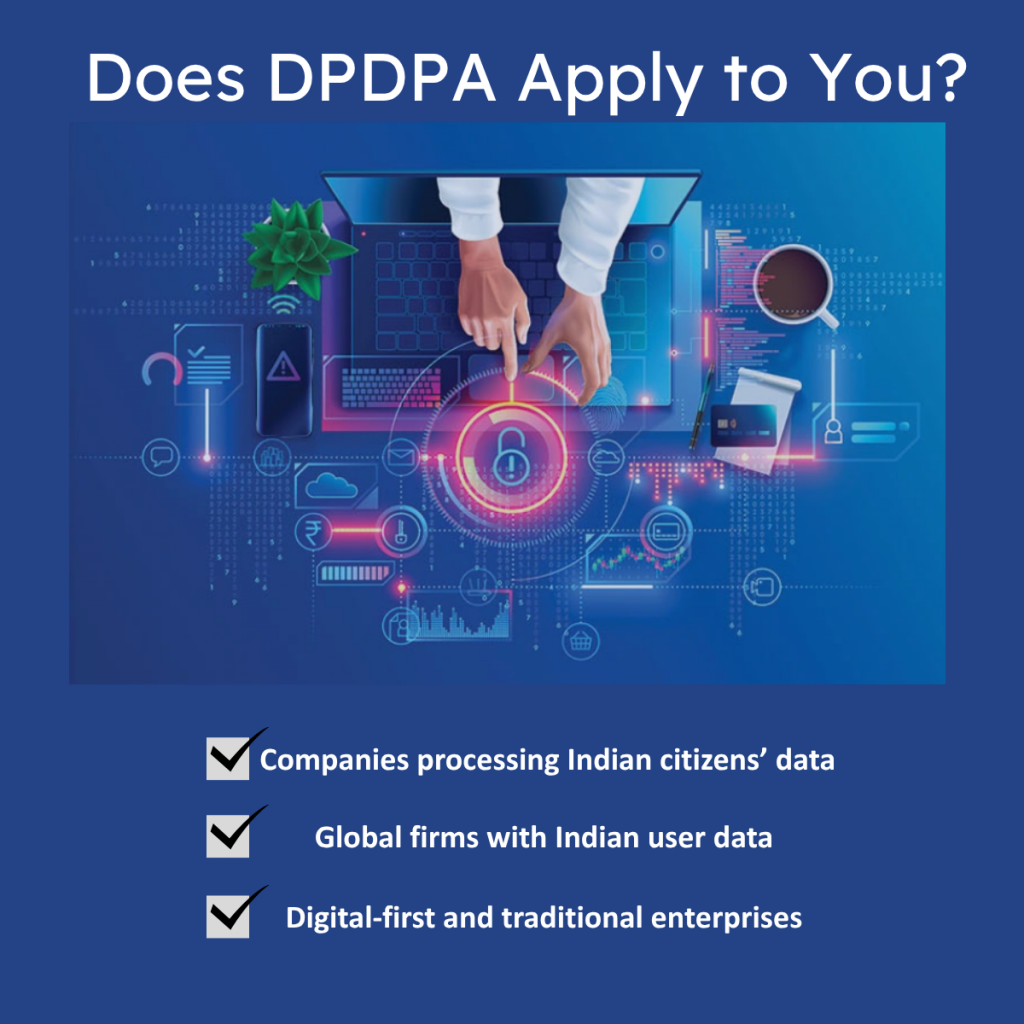
The DPDP Act applies to:
The inclusion of public authorities and government departments further underscores the Act’s intent to ensure uniform standards across both private and public data ecosystems.
Certain exemptions apply for:
However, even exempted entities must adhere to reasonable security practices and are not absolved from accountability in the event of gross negligence or misuse of personal data.
The DPDP Act introduces one of the strictest penalty regimes in Asia, emphasizing deterrence and accountability. The Data Protection Board of India (DPBI) is empowered to investigate violations and impose monetary penalties based on severity, intent, and recurrence.
Key penalty slabs include:
| Violation | Penalty (up to) |
| Failure to take reasonable security safeguards leading to data breach | ₹250 crore |
| Non-fulfilment of data principal rights (access, correction, erasure, grievance redress) | ₹200 crore |
| Non-notification of data breach to DPBI or affected individuals | ₹150 crore |
| Violation of obligations by Significant Data Fiduciaries (e.g., DPIA, audits, DPO appointment) | ₹150 crore |
| Non-compliance with orders of the DPBI | ₹50 crore |
| Failure of Consent Manager to fulfil obligations | ₹10 crore |
(Source: DPDP Act, 2023, Schedule on Financial Penalties)
Beyond financial penalties, the Board can direct entities to cease data processing, delete unlawfully collected data, or suspend operations in severe cases. Such actions could have reputational and operational consequences far beyond monetary loss — particularly for global companies relying on India’s data flows.
Many organizations are still in the early stages of remediation — conducting privacy policy reviews, redrafting contracts with vendors, and appointing independent consent managers or DPOs.
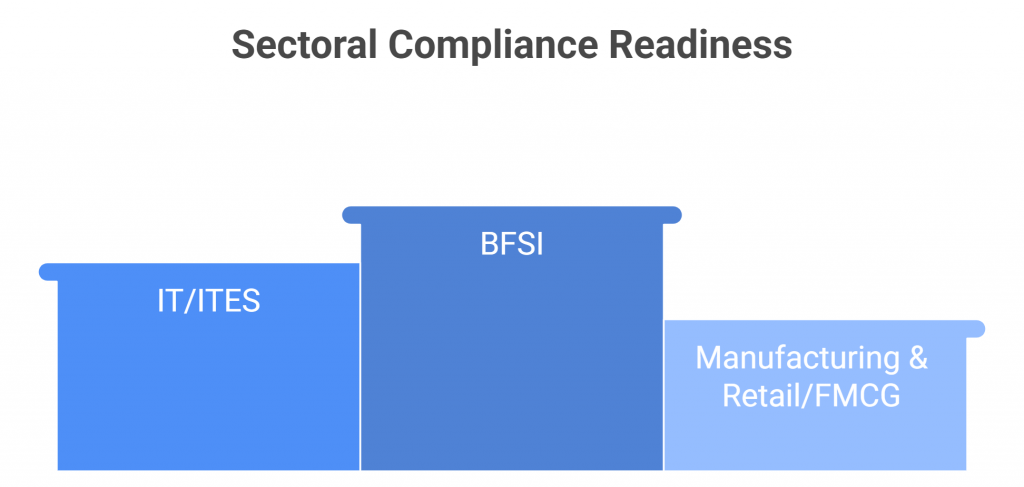
In fact, sectoral trends reveal that regulated industries such as banking, financial services, and insurance (BFSI) are among the most proactive, with the majority reporting partial or near-complete compliance. The IT/ITES sector follows suit, adopting regulations quickly. By contrast, the manufacturing and Retail & FMCG sectors lag behind, citing complexities in data flow mapping, cross-border transfers, and third-party vendor alignment.
The following checklist translates the Act and the 2025 Rules into practical steps for Chief Privacy Officers (CPOs), Data Protection Officers (DPOs), CISOs, and compliance leaders tasked with building a privacy-first organization.
✅ Appoint a Data Protection Officer (DPO)
✅ Constitute a Data Protection Committee or Working Group
✅ Board-Level Oversight
✅ Conduct End-to-End Data Mapping
✅ Create a Centralized Data Register
✅ Deploy Verifiable Consent Frameworks
✅ Register or Partner with a Consent Manager
✅ Review Privacy Policies
✅ Implement “Reasonable Security Practices”
✅ Develop a Breach Response Plan
✅ Build User Rights Interfaces
✅ Maintain Transparency Logs
✅ Implement a Purpose-Bound Retention Schedule
✅ Audit Vendor Contracts
✅ Manage Cross-Border Transfers
✅ Conduct Regular Audits and DPIAs
✅ Implement Organization-Wide Privacy Training
✅ Continuous Compliance Monitoring
✅ Publish an Annual Privacy and Accountability Report
| Category | Action Required | Status |
| Governance & DPO Appointment | Establish accountability structure | ☐ |
| Data Mapping & Inventory | Identify all personal data flows | ☐ |
| Consent & Notice Management | Deploy verifiable consent tools | ☐ |
| Security & Breach Response | Implement 72-hour reporting protocol | ☐ |
| User Rights | Launch rights management portal | ☐ |
| Vendor Compliance | Review contracts & cross-border transfers | ☐ |
| Training & Audits | Conduct annual data privacy audits | ☐ |
According to ETCISO Intelligence, nearly 60% of CISOs and compliance leaders believe that DPDPA readiness will take another 12–18 months for full-scale implementation, particularly in large and mid-sized organizations with legacy systems and complex vendor networks.
The DPDP Rules 2025 demand more than documentation, they demand real-time evidence of accountability. SPOG.AI provides that foundation by connecting privacy, security, and governance workflows into a single, intelligent fabric.
In a landscape where penalties can reach ₹250 crore per violation and reputational damage can be irreversible, SPOG.AI enables organizations to move from compliance anxiety to compliance confidence — with clarity, automation, and measurable control.
As India positions itself as a global data hub, the DPDP Rules 2025 will serve as both a compliance benchmark and a cultural inflection point. Whether they succeed depends not only on enforcement but also on how seriously organizations internalize the principle that privacy is not a cost — it’s a competitive advantage.
Yet, as multiple studies highlight, most organizations remain in the early or intermediate stages of readiness. Legacy infrastructure, fragmented data systems, and evolving interpretations of regulatory clauses continue to slow down implementation.
The real challenge, therefore, is not intent — it’s execution. Organizations need to bridge the gap between policy compliance and operational maturity, ensuring that privacy is not just documented but demonstrably practiced.
SPOG.AI can help organizations operationalize the DPDPA with unified governance, risk-based prioritization, and real-time compliance insights.
Ultimately, India’s data protection journey is just beginning. The success of the DPDP framework will depend not only on how strictly it is enforced, but also on how deeply it is embraced by businesses, regulators, and citizens alike.
Compliance must evolve into culture, and culture into trust.
Organizations that act early, invest in intelligent compliance infrastructure, and treat data protection as a strategic advantage rather than a legal burden will define the future of India’s trillion-dollar digital economy. One where privacy and innovation coexist by design, not by exception.

Organizations invest heavily in security tools, compliance programs, and risk management processes. Yet many security leaders still struggle...
Introduction — When the Cloud Shakes, Compliance Crumbles When AWS’s US-east-1 region went dark, so did thousands of...
Introduction There are two sides to a coin and AI is no exception. AI’s versatility is what makes...